Was This Review Helpful? The Search for an Unassailable Masterpiece

Not long ago I asked the young students in a fiction workshop I was teaching to name a few novels that, in their view, stood the best chance of becoming seminal works of their generation. Among titles that came up more than once was that of Dave Egger’s first novel, You Shall Know Our Velocity. Curious, I got hold of the book, read it, and found it awful (for the record, I’d very much enjoyed Egger’s memoir, A Heartbreaking Work of Staggering Genius, up to a point). Which made me wonder: was I completely out of touch?

To find out I did something I’d never done before. I looked up Egger’s novel on Amazon and checked out the customer reviews. If I wasn’t out of touch I was certainly outnumbered. The novel had earned an average rating of five stars (the highest), with enthusiastic reviews stacking up ten-to-one against those less favorable, and satisfied customer after customer proclaiming Egger’s novel the “best” he or she had ever read—making me wonder just how many novels those reviewers had ever looked into. To vent my indignation I submitted a review of my own—a drop of vitriol against the flood of unalloyed praise.

That calmed me down for about ten minutes, until an even more disturbing thought crossed my mind. What might the same unprofessional critics have to say about the books I’d loved as a younger man? If I looked up the customer reviews of, say, The Man With the Golden Arm, On the Road, Tropic of Cancer, or A Catcher in the Rye, what would I find? These were books that I’d not only read, but carried around with me in the back pocket of my jeans like talismans, cheap paperbacks whose acid-rich pages I dog-eared and fondled into ochre crumbs and dust. I had grown up with them no less than I’d grown up with my family and friends, and loved them just as much. What would today’s readers have to say about them? I hesitated to find out, yet I couldn’t resist.

I started with The Man With the Golden Arm, Nelson Algren’s 1948 novel about a heroin junkie set in and around Chicago’s seedy, neon-lit Division Street. I discovered the book at age thirteen, while alphabetizing Mr. Berg’s library (see “Dirty Books” below: where I call him “Mr. Boyd”). Mr. Berg was a parsimonious widower who lived alone in a modest shingled house at the top of a woodsy hill. The library was in his basement, in a room holding an army surplus cot and a dehumidifier. The room stank of mildew; the dehumidifier didn’t work. The books were all cheap Signet and Plume paperbacks, which, when he bought them in the fifties and sixties, cost somewhere between a quarter and seventy-five cents. As I pulled them from the shelves their desiccated spines snapped; their pages broke free and fluttered, like brown autumn leaves, to the floor. As I picked them up some of the pages caught my eye and I’d read them. The page of Algren’s novel that fell out happened to be the first page. It begins:

The captain never drank. Yet, toward nightfall in that smoke-colored season between Indian summer and December’s first true snow, he would sometimes feel half drunken. He would hang his coat neatly over the back of his chair in the leaden station house twilight, say he was beat from lack of sleep and lay his head across his arms upon the query room desk.


To date I’d probably read two books, both about ships and heavily illustrated. Still I went home with Algren’s novel tucked in my pocket and over the next week or so gulped down its four hundred-plus pages with the fervor of a parched man slaking his thirst. Something about Algren’s prose, the lilt of its sentences, gripped me and wouldn’t let me go. For the first time, thanks to Mr. Algren and Mr. Berg (who, in my mind, had merged), I fell in love with novels. Now, thirty years later, what would Amazon’s customers have to say about the book that turned me into a reader—and ultimately into a writer?

There were less than a dozen customer reviews posted, with the average review totaling a respectable four-and-a-half out of a possible five stars. Among these most were laudatory—no wonder, since the book won the first National Book Award. Still, as I scrolled through the reviews a sinking feeling came over me, a sense that the positive reviews were mostly by people of my generation or older, and not representative of contemporary tastes—a suspicion reinforced when I came upon this review by “mojo navigator”:

[The Man With The Golden Arm] is ponderous, turgid and lacks any sense of urgency and desperation that its central theme—heroin addiction— should necessitate. Situations and relationships are one-dimensional and cardboard-cutout-like rendering them thoroughly implausible. However, the real failure of this novel is in its dreadfully antiquated ‘hip speech’, a failed attempt on the part of Algren to capture the street lingo of the time ¼ [Algren’s dialogue] sounds false and clumsy, making the novel unnecessarily difficult to read. Bottom Line: If you’re looking for an accurate depiction of drug addiction in ’50s America, you won’t find it here.


Ouch! A cyanide-tipped arrow straight through my literary heart! The worst thing about “mojo’s” review is that he (or she?) is right; Algren’s novel has dated badly. It was as if I’d been shown a photo of my first heartthrob only to realize that she had crossed eyes, pimples, and big ears.

Let’s concede that The Man With the Golden Arm had been a great book in its time, and remains a good one, but it’s an eccentric book and hardly one for the ages. I decided to try another favorite, one that, for my generation at least, certainly qualifies as a “classic.” Into the Amazon search field I typed “on the road,” and then, with breath held, scrolled down to the reviews.

The first two of five hundred and sixty-two reviews I found weren’t all favorable, but they weren’t that bad. One reviewer, having proclaimed the book “the classic beatnik novel,” confesses that it took him four tries to get through it. Some of the reviews are sharp. A Matt Martin of Fort Collins, Colorado damns Jack Kerouac’s masterpiece with faint praise, then distils the books’ main problem down to its “fusillade style” which “preemptively fore[goes] ¼ real character complexity or narrative development.” Ultimately, he dismisses On the Road as a “personal travelogue” and disses it with a paltry two stars.

But compared to others Matt’s review is generous. After coughing up a single star for the book that sent me and thousands like me hitchhiking across America, “manwithnoname” of Melrose, California, opens his review with a typographic snooze, “ZZZzzzzzzzzzzzzzzzzz……..” —then apologizes for having fallen asleep while reading the book. Then, having proclaimed the book utterly plotless, he excuses himself and goes back to sleep again. Richmond “Spider” of Florida, having cast his own “death star,” describes On the Road as a “disjointed story” about a “dude with no background being lead around by a pseudointellectual jerk [Dean Moriarity, a.k.a. Neal Cassady] with no respect for anyone but himself.” So much for a classic.

Maybe On the Road wasn’t the best choice. Even when first published, it was a controversial book that earned mixed reviews. How about that other classic of youthful rebellion, A Catcher in the Rye? Surely the classic coming-of-age novel wouldn’t suffer an ignoble fate in the hands of Amazon’s loyal customers.

To be sure the book still has its fans, as indicated by the four-out-of-five star average. But the bad reviews come fast and furious, with Linda “Ayeldee” warning potential readers that, though funny in parts, the book will make you “want to kill yourself,” and pitying those forced, like her, to read it in school since “you can’t throw it out the window and get rid of it.” Two reviews down, things get worse, with another involuntary reader, “Cher630” of the Bronx, calling the novel’s protagonist a “whiney, immature, angst ridden teenager who need[s] a smack in the head.” Cher goes on to brand Salinger’s hero “a phony.” Holden Caulfield, a phony?

Oddly, some of the reviewers who hate the book most sound remarkably like its narrator. Listen to John Hechtlinger of Fort Lee, New Jersey: “This book killed me. . . somehow I never read it as a teenager or college student but it seemed alot[sic] of people read it and loved it so I wanted to finally find out what the book is all about . . .Well, anyway, it’s definitely not great literature, that’s the first thing I discovered, and he writes with this phony pseudo alienated-but-artistic-youth style that makes you pretty much wanna throw up.”

After a dozen reviews like that I felt pretty sick myself, as if it my own novel had been lambasted. Forgive them, Lord, for they know not what they do.

If this is what contemporary readers thought of Kerouac and Salinger, I hesitated to imagine what they’d say about my other hero, Henry Miller.

“Sex belongs in the bedroom, NOT the library!!!!” writes Jon Deepcreek in his review of Tropic of Cancer, and goes on to say, “This book is filthy. I had to take a shower after I read it. Why doesn’t he [Miller’s narrator] get a job? Why does he have to live in France? Why doesn’t he save his money instead of investing it in alcohol and hookers?” These are good, practical questions to ask of Miller’s protagonist, but also ones that fail to take into account the spirit of rebellion in which Miller’s book was written, and which, aside from its notorious (yet surprisingly scant) sex, is its chief virtue. The children of the counterculture that embraced works like Miller’s have apparently taken to wagging their fingers at their parents’ favorite authors, blaming them for the less-than-enlightened world they were born into. Which may explain why vast majority of the customer reviews of Miller’s book boiled down to three words: “Get a job.” So much for the spirit of rebellion.

Possibly a novel without a countercultural theme, one written by a man, would fare better? What about Marilynne Robinson’s Housekeeping (1980), a novel I’ve recommended to many without reservation. Gorgeously written (so I felt—and feel), with a cast of quirky, complex characters and the indelible image of a house half-submerged by floodwaters. What’s not to like?

According to Amazon’s customer reviewers, plenty. “This book is without a doubt the most dull, uninteresting, and painful piece of literature I have ever set my eyes upon,” writes Karl (no address given). How something can be dull and painful is worth pondering. Conceding that the author is “not without talent and intellect,” Karl berates Robinson for serving up “beautifully crafted scenarios” via “a multitude of metaphorical sentences” that add up to “no real meaning.” Karl concludes, “This book is an utter waste of time.” One star.

One star for a book I’d recommended to dozens. I should have dismissed Karl as a crank; it would have been easy enough, since his was by all means a minority view. But how can you argue with someone’s feelings? For whatever reasons, Housekeeping bored Karl stiff, such that the texts of Catallus and Cicero (which, Karl claims, he read in Latin class), though equally tedious and hard to understand, at least made some sense to him.

What it took Karl three paragraphs to say, “Nose in a Book” of Harrisburg, Pennsylvania, summed up in one word: “Blech!!!” While such outbursts don’t exactly flaunt a reviewers’ intellectual or verbal powers, who can deny their eloquence and concision?

By now I was all but convinced that there is no such thing as an unassailable classic. All but. Two final tests remained. To perform them, I’d have to find books that had been both popular and critical successes, bestsellers beloved by millions, and not just over a decade or two or three, but for at least forty years.

It took me three seconds to arrive at To Kill A Mockingbird, Harper Lee’s perennial bestseller about murder and racial injustice in the deep south. True, the book has its flaws, including Atticus Finch, that stick-in-the-mud emblem of paternal righteousness, and also its child narrator’s tendency to favor words like “assuaged.” Still, what’s to hate? Right?

Of a whopping 1,529 customer reviews, the majority were decidedly uncritical, with “AWESOME CLASSIC!!!” a typical response, down to its orgy of exclamation points (with “I love this book!” coming in a close second). I had to scroll through seven pages to find a dissenter

“Picked up this book from the library due to the reviews,” Yoo Win writes, “plus heard from the conversation between 2 colleagues that it is a page-turner. However, it is to my disappointment [sic] from page 1 to page 40. I could not drag myself to wade through page 40.” Okay, so English isn’t Yoo’s first language. Still, he gets his point across. “It seems like a book with no clear objective to convey. It might be the greatest literature book as is claimed, it is just not my kind of book.”

Not a knockout punch, but no love-tap, either. The decisive blows were yet to come, like this one from “Kid,” whose staccato caption delivers its verdict like a judge pounding his gavel: “Worst. Book. Ever.” Kid continues: “Let me just say this: the book is boring. It starts out with Scout talking about how her brother once broke his arm. Who cares? The book’s most exciting part [the trial?] is extremely confusing, and don’t tell me I’m stupid; I have an IQ of 140.” But even this review is a rave compared with what Nadia of Wisconsin says. “This book is very nasty. It depicts scenes I would not care to see if I was being PAID. It’s just a sick book. Don’t read it, kids.” So much for the inviolability of To Kill a Masterpiece—ur, a Mockingbird.

I tried one more book, one that had not only been soundly embraced for a solid century. What sort of nasty things would Amazon’s reviewers have to say about Jane Austen’s greatest novel, Pride & Prejudice?

This time I had to scroll through seventy out of seven-hundred and fifteen reviews to get to one that was even mildly excoriating. “Read this,” writes Ikaro Silva, “if the sole goal of your life is to get married.” Ikaro goes on to reduce Austen’s novel to “just a new version of Cinderella” and one that “portray[s] all women as conformists.” Take that, Jane!

But even this reviewer gives the book two out of five stars. The only one-star review I found was by Juan Camarillo of San Antonio, who writes: “From a fan of IMMANUEL KANT, this was too boring.” Juan proceeds: “I had to study the Diamond Sutra and the Book of Job to get the vapid feeling out of my head.” Juan then quotes another reviewer who had written, “as Blake saw the world in a grain of sand, so did Austen see the world in a drawing room.” To which Jake responds, “There is a vast difference in seeing the world in a drawing room and thinking that the world IS a drawing room.”

What strikes me about even the most outrageous of these reviews is that they all hold some truth, if only the truth of one reader’s experience, and novels are meant to be experienced intimately, by individuals, not en masse. And just because the views expressed are those of a minority doesn’t make them any less valid. Nor can they be written off as the opinions of amateurs, since by and large novels are written for amateurs, not for critics.

And I also have to confess to taking some comfort—and even a certain twisted pride—in the fact that great works are as subject to censure as my own modest performances: a fact that makes it possible, through the following syllogism, for me to equate my work with theirs:

Major Premise: All great works are subject to criticism

Minor Premise: My work is subject to criticism

Conclusion: My work is great

On the other hand there’s something undeniably upsetting about having your favorite books flogged in public, even if the flogging is administered by one or two cranky dissenters amid throngs of rabid devotees. As Kurt Vonnegut pointed out with characteristic wit, a critic laying into a novel is like someone putting on a full suit of armor to attack a banana split.

Still, ours is a democracy where—so far, anyway, at least about harmless things like works of art—people are still free to say what they think. That leaves works of fiction not only open to interpretation, but subject to opinion. What touches one reader may injure, offend or bore another. So it goes.

That said, though a novel may be subject to opinion, its greatness isn’t. That masterpieces exist is all the evidence we have against artistic relativism, but it’s damning evidence. The quality of a work of art isn’t a matter of opinion any more than the shape of a snowflake or the smell of rotten eggs: it simply is. And like those who so freely give them, opinions come and go. But masterpieces endure. In the end the only stars that matter are those cast by time.

Meanwhile, since we have no choice, we should welcome the opinions of others—even if we have to take them with a Taj Mahal-sized grain of salt. And remind ourselves, while doing so, of the immortal words of G. C. Lichtenburg:

“A book is a mirror. If an ass looks into it, you can’t expect an apostle to look out.”

Posted in Uncategorized | 2 Comments

John Hoyer Updike, 1932 – 2009

How sad to learn that writing and publishing 60 books—many superb—does not make one immortal. He never won the Nobel Prize. He didn’t need to. The quality of his best work will carry him. His plots weren’t memorable; unlike Dickens or even Steven King, he was no great story teller. He will be remembered mostly for the textures he created with words, and for the ideas, acute observations, and feelings those words carried. At his best he could wrap a feeling in language better than any living American writer. At his worst be overdid it. As his contemporary Norman Mailer complained in Advertisements for Myself, “[Updike], like many good young writers before him, does not know exactly what to do when action lapses, and so he cultivates his private vice, he writes.” But observe how gorgeously Updike abuses his talent. Listen to him here, for instance, describing an encounter with a box of cough drops in Grand Central Station:

Coughdrop Hill took its name from its owner, whose coughdrops (“SICK? Suck an ESSICK!”) were congealed by the million in an Alton factory that flavored whole blocks of the city with the smell of menthol. They sold, in their little tangerine-colored boxes, throughout the East; the one time in my life I had been to Manhattan, I had been astonished to find, right in the throat of Paradise, on a counter in Grand Central Station, a homely ruddy row of them . . . In disbelief I bought a box. Sure enough, on the back, beneath an imposing miniature portrait of the factory, the fine print stated MADE IN ALTON, PA. And the box, opened, released the chill, ectoplasmic smell of Brubaker Street. The two cities of my life, the imaginary and the actual, were superimposed; I had never dreamed that Alton could touch New York. I put a coughdrop into my mouth to complete this delicious confusion and concentric penetration; my teeth sweetened and at the level of my eyes, a hollow mile beneath the ceiling that on an aqua sky displayed the constellations with sallow electric stars, my father’s yellow-knuckled hands wrung together nervously through my delay. I ceased to be impatient with him and became an anxious as he to catch the train home.

If this be sinning, then give me chastity, by all means—but not yet! Here is a writer who could make the paint on the side of a slowly passing truck seem to “weather in transit” in its slowness. There are countless moments like this in Updike’s prose. It’s the kind of writing you read for the sentences, and maybe the paragraphs, rather than for the scenes, chapters, and stories.

I watched a long cable television interview recently with Updike its subject and wherein viewers were allowed to phone in with comments and questions. One of the callers, after praising Updike’s refusal to damn President Bush and his administration (a Republican, clearly) and noting the “technical perfection” of his work, went on to add “however” and to say that he found Updike’s entire ouvre “boring.” Mr. Updike sat with a bemused yet still painful look on his face, and then, when the caller had finished, said something to the effect that luckily for readers there were a great many books of all kinds to choose from, and so one needn’t be bored. It was an extremely gracious reply to an extremely rude comment, and it made me realize one of Updike’s chief characteristics as both author and man: his elegant decency. Those two words, perhaps, for better or worse, best describe him as a writer (they certainly describe him as a reviewer, one whose decency often skewed his assessments of other authors toward charity and even a touch of paternalism). They also describe his prose, at times too elegant and “decent” for its own—or its subjects’—good. Unlike Bellow, Updike could never roll up his sleeves, whip off his tie, and roll in the mud with thugs and hooligans: the vernacular simply was not in him. Stories of his like the heavily anthologized “A&P,” in which he adopts the slang and bad grammar of a subliterate teenager, fail to convince: for all his wanting to get down and dirty Updike cannot keep his hands off of words like “deliberate’ and “hereafter.” If Updike’s elegance got the best of him, it was because it was the best of him. I’m told he wore a rut into the floorboards under the desk where he worked from kicking his shoes back and forth in concentration on the floor. This tells me he wore shoes at his desk; it would not surprise me to learn that he wore a suit and tie as well. His was a buttoned-up soul. And America distrusts men who are too elegant. It feels much more at home with macho writers like James Jones and Mailer and slobs like Kesey and Kerouac.

A WASP who wrote mainly about WASPS, whose favorite sports were tennis and golf. Though I befriended him through his writing, I doubt very much that we’d have been friends for real, we were of such different worlds. Though we did share one thing in common: we were both big on cartoons, and had we been in the same class together he would have appreciated the caricatures I drew of everyone in high school—though by then he would already have been a devotee of the New Yorker, while I was reading MAD magazine. 

The passage that I quoted above cost me two hundred dollars to use in my book about writing. That’s how much Alfred Knopf charged me. I still have the piece of paper Updike himself signed for the transaction. At the time I thought it was a stiff price to be charged for what I saw as a tribute; I felt, furthermore, that I needed that two-hundred bucks way more than Mr. Updike did. Now that he’s gone, though, I’m glad to have paid him both money and tribute. He may not have won the Nobel Prize, but long ago he won my admiration.

Posted in Dreaming on Paper, Uncategorized | Leave a comment

Six Stories That Influenced Me

In no special order:

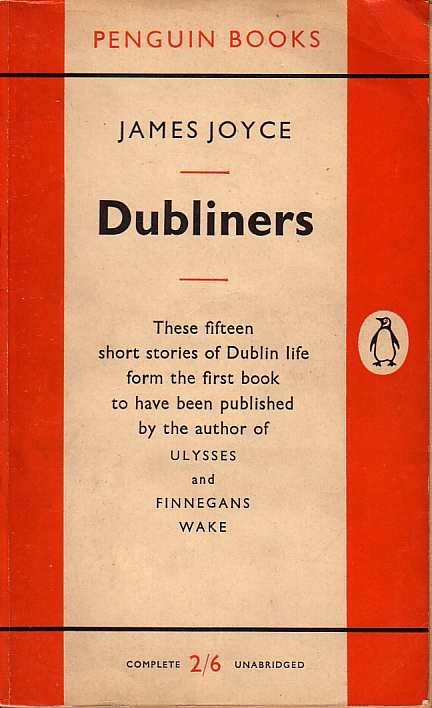
1. A Painful Case—James Joyce. Like everyone else in college I had to read Joyce’s Dubliners. I remember being touched by a passage in “A Painful Case” where the protagonist’s entire sad existence is equated with a solidified deposit of grease from the cabbage on his plate. Joyce could be gritty, but his was a grittiness of supreme elegance (in one of his tales a pervert exposes himself to a group of pubescent boys, one of whom says, “By Jove, he’s a queer old josser”; the entire event is compacted into that line of dialogue). Dubliner’s also served as a corrective for the tendency to melodrama that infects most early writing: from those stories I learned that drama isn’t contingent on sensational events, that small moments or “epiphanies” can carry dramatic weight.

2. The Swimmer—John Cheever. Cheever’s stories take the same lesson closer to home. With Cheever there’s an added element of urbanity, of wit, and a more than occasional dose of surrealism. A story like “The Swimmer” is hardly realistic, yet it doesn’t read like fantasy or fable: it is deeply gritty and unrelenting in its portrait of a man confronting mortality. (John Cheever’s son, Benjamin, by the way, is a superb writer himself, and a friend.)

3. The Face on the Barroom Floor—Nelson Algren. As an antidote to what is beginning to sound like a very shopworn list of influences I’ll add Nelson Algren’s The Neon Wilderness, his only book of stories, and especially “The Face on the Barroom Floor,” where in the character of Railroad Shorty one encounters the least pitiable cripple in all of literature. Algren taught me that you can be ruthless and funny at the same time, that “serious” themes do not, necessarily, demand earnestness or preclude humor (I can think of few tragedies funnier than A Streetcar Named Desire—though Hamlet comes close).

4. All You Faceless Voyagers—Ivan Gold. Writers who aren’t funny are doing something wrong. Whatever else can be said for the truth, it ought to be good for a laugh. Ivan Gold, whose stories are collected in Nickel Miseries, knew this. Gold writes sentences of an acrobatic virtuosity that Carsisle might have envied. But for all his virtuosity his pages burst with as much savage honesty as Bukowski’s. “All You Faceless Voyagers” tells of a savage attack by an insane cabin passenger aboard a “one-funneled” tramp steamer, a tale gruesomely funny. Stories like it prompted Lionel Trilling to predict that its author would become “one of the commanding writers of [his] time”—a prediction that failed largely due to Gold’s drinking.

5. How to Build a House—Lawrence Durrell. Other influences briefly summed-up: Lawrence Durrel’s Bitter Lemons (nonfiction), particularly a story about building a house on Corfu, for its evocation of character and setting—and for treating them as one (ditto Paul Bowle’s “A Distant Episode.”). Durrell, too, can be quite funny while painting rich landscapes in thick word-impastoes.

6. Hey Sailor, What Ship—Tillie Olsen. I’ve not mentioned any women yet, but Tillie Olsen’s Tell Me a Riddle was a collection I carried around until the pages holding “Hey, Sailor, What Ship,” broke free of the spine in protest of my repeated gropings. Books like hers gave me persmission to try things I wouldn’t have tried otherwise, to experiment with texture and voice, for instance, and rebel against the tyranny of a linear plot structure. Permission to try things: more than anything else, that’s what I’ve sought from other writers.

Posted in Dreaming on Paper | Leave a comment

Dirty Books

Books are filthy. I found that out some months ago when I volunteered to help re-shelve books as part of a renovation project at the Mercantile Library in Manhattan. The library, founded by merchants in 1820—before there was a public library system—has one of the biggest fiction holdings in the country. For decades the books were stored in cave-like stacks, arranged eccentrically by title and inaccessible to the library’s patrons. To get a book you had to fill out a slip and give it to the librarian who, with the desultory air of someone being asked to descend into the fifth circle of Dante’s Inferno, would abandon her front desk perch and plunge into the stacks, or get an intern to do it. The renovation will change all that, with the stacks accessible, well-lit, and arranged—with Melville Dewey’s blessing—by author.

Since discovering it years ago I’ve loved the Mercantile Library, known to its members simply as the Merc. It’s one of those rare oases in the heart of New York City, a book-lined refuge in that desert of commerce and noise known as midtown, just steps from the northern entrance to Grand Central Terminal. At first you can’t believe it’s there, the place is so quietly wedged among skyscrapers and other “monuments to men’s mysteries”—as Saul Bellow refers to them in the opening sentences of The Victim, his first novel. But even once you accept that the Merc is no mirage, still there’s that nagging suspicion that, like Billy Pilgrim, the hero of Slaughterhouse 5, it has come unstuck in time. Though the librarian has a computer on her desk, there are no other computers or machines of any kind to be found anywhere in the library, no copiers or microfilm viewers, no books on tape or videos or DVDs. Just good old-fashioned books and lots of silence to read them in.

So when asked to volunteer I didn’t hesitate. At the front door I was greeted by Brenda, the head librarian, a willowy blonde, who rode with me up the library’s creaky, slow elevator to the 4th floor. There I was introduced to Stacy, the intern, a compact, perky brunette, who handed me a pair of white surgical gloves along with my marching orders. My task: take down all books by authors with surnames starting with M through Z from the shelves, sort them, put them on a cart, trundle them up to the 5th floor, and re-shelve them.

It seemed easy enough at first. I chose a place among the stacks still groaning with novels arranged by the old system, with titles all beginning with E, and set to work, extracting books according to their author’s last names. In the beginning I restricted myself to M authors: Morris, Miller, McBain, Morgan, Maugham. . . But then I noticed there were a lot of S authors—Smith, Scanlon, Shaeffer, Solowitz—and pulled those down, too. And will you look at all those P’s (Peck, Porter, Platt, Patrick. . .) and R’s (Reilly, Roth, Reilly, Rhodes—there must be thousands of writers named Rhodes!) and W’s (Wallace, Winchell, West). . . My head started to spin. I kept moving books around, taking them from one shelf or pile and putting them in or on another without reason or rhyme. I kept trying to come up with a system, but no sooner would I devise one than I would break its rules. It was hot in the stacks. Somewhere an air conditioner thrummed, but it made very little difference. Drops of sweat fell from my nose. Meanwhile the books seemed to swirl around me, with the first letters of their author’s last names swirling with them, rising and sinking to the surface like letters in a bubbling cauldron of alphabet soup.

And then there was the dust. God were those books dusty! At first I couldn’t see it, the stacks were so dimly lit, but when I went to get a drink of water, I looked down at my surgical gloves and they were black, like I’d been shoveling coal. Some of those books hadn’t been taken from those shelves in decades. The oldest ones disintegrated as I took them down, having been held in one piece only by the books surrounding them. They turned to pale brown dust in my hands, their covers snapping to bits and fluttering to the floor, to join the rest of the brown covers turning to mulch there, like leaves on a forest floor.

Then there was the smell, that musty, nutty, mushroomy smell of dying old books, a smell that took me back to the summer of 1971, when I was thirteen years old, the summer I lost my literary virginity. I had been alphabetizing Mr. Boyd’s books. Mr. Boyd lived in a cedar-shingled house at the top of a wooded hill (this was in Connecticut, where there were lots of woods). Mr. Boyd couldn’t see his closest neighbor and liked it that way. Mr. Boyd was a misanthrope and a miser. He looked like Lee Marvin in Hell in the Pacific, but bald, with big ears that had clumps of white hair sprouting from them and a thick, slick-looking lower lip. Since the death of Sally, his wife and my mother’s best friend, Mr. Boyd become a self-elected member of our family, showing up uninvited for lunch and dinner and sometimes early in the morning, for breakfast. He would clomp around our kitchen with his yellow brogans coated with dried mud from one of the construction sites he owned, leaving trails of mini dirt bombs that our dog would eat. He’d drink my mother’s coffee, then complain that it was lukewarm and weak, and called my father “egocentric.” Still, I liked Mr. Boyd. I liked how he always whispered, so you had to lean close to hear him, and the way his big hands trembled when turning a screwdriver. He told funny stories about being in the Navy (my “egocentric” father never went to war) and about his morbid fear of water.

That summer, after I’d painted the trim on his cedar house and cleared his yard of fallen branches left by winter storms, Mr. Boyd asked me to rearrange the library he kept in his basement, in the same room where, on sweltering hot summer nights, he slept on an army cot to save on air conditioning. There were hundreds of books—Mr. Boyd was very well read. Most of them were cheap Signet paperbacks from the forties and fifties, their pages brown and brittle with age. In exchange for alphabetizing them Mr. Boyd said I could borrow any that interested me—an offer I greeted with little enthusiasm, since back then, unless they had pictures in them, my interest in books was nil.

In fact I was barely literate; sub-literate, I guess you could say. My parents were both from Italy. My mother’s English was poor. And since my father forbid her from speaking Italian to me or my brother, she never read to us. As for my father, a polymath inventor and certified genius, he was too busy writing books of his own—on physics, etymology, psychology, philosophy—to read any to his children. Except for my mother’s gialli (Italian pulp magazines), the books on our shelves all belonged to my father, and were mostly in French or German, his favorite languages. If it sounds like I’m trying to blame my parents for my sub-literacy, I’m not. I’m merely pointing out that, until that summer, books—at least those in the English language—had not been a part of my frame of reference. The only books I’d read were Mad paperbacks, and then I’d look at the cartoons and ignore the words.

When I rearranged the books in Mr. Boyd’s library that all changed. As the books fell apart in my hands I began to wonder about what was in them. That they were in such terrible shape only made them that much more intriguing to me. They were like bones, pottery shards and other relics at an archeological dig. The voices of all those decomposing books screamed to me, begging for one last pair of eyes to read them before they dissolved into dust. And I knew if I didn’t read them no one else ever would. For sure Mr. Boyd wouldn’t read them again. He hadn’t touched them in years, and kept them only for the same reason he kept old cars and newspapers and empty jars and scraps of Saran wrap and aluminum foil, because he was a miser and hated throwing things away.

And so, while sorting Mr. Boyd’s books, I would dip into those whose titles spoke to me. I dipped into The Heart is a Lonely Hunter and Invisible Man and The Naked and the Dead. If the first few lines were any good, I’d read a bit more. If I got through the whole first page without my interest flagging, then I would lay the book down—carefully, like the body of an injured bird—on the striped blanket covering Mr. Boyd’s cot, next to the bodies of other books that held my interest, forming a sort of triage station of books on the emergency ward. At the end of each day I’d choose which patient to take home with me and “rescue.”

Though most of Mr. Boyd’s books were novels, there were some non-fiction titles too, like Two Cents Plain, by Harry Golden, and Endurance, by Alfred Lansing, and May This House be Safe From Tigers, by Alexander King. But mainly my interest was drawn to the novels. That first novel I took home was The Man with the Golden Arm, by Nelson Algren. It’s about a heroin junkie named Frankie Machine, and takes place in Chicago. That night I sat up in bed and read the whole thing. It was the first grown-up novel I’d ever read from cover to cover and by my own volition. Some sentences I read two or three times, and not because I didn’t understand them, but because I wanted to savor them, to turn them over and over again and let them melt slowly, like butterscotch Lifesavers, on my tongue. I loved the way the paragraphs looked, packed tightly on those brown, brittle pages that fell away one by one from the book’s spine as I turned them. And I loved that smell, that damp, musty, fusty smell, which I equated with the slums of Chicago, circa 1947, with sagging tenements and whores with heart-shaped face. By the time I put the book on Mr. Boyd’s shelf, between James Agee’s A Death in the Family and Saul Bellow’s The Victim, there was practically nothing left of it.

Though I worked every Sunday afternoon, still, it took me more than half that summer to rearrange Mr. Boyd’s books. For every minute that I spent alphabetizing, I spent three minutes reading. Mr. Boyd didn’t seem to mind. Every so often he’d look in on me, dressed in the greasy coveralls he wore to repair his old cars. Catching me sitting on the edge of his cot, turning the pages of a book, he’d throw me a smirk, his fat lower lip crawling and glistening up one side of his face like a banana slug. I read A Face in the Crowd, by Budd Schulberg, Lilith, by J R. Salamanca, The Grass Harp, by Truman Capote, and Intimacy, by Jean Paul Sartre. I read The Big Sky and The Maltese Falcon and The Postman Always Rings Twice. To read novels was to run far away from home, to hop freight trains and shoot heroin and murder husbands and fall in love with dark angels; it was assaulting a Japanese-held island during World War II and stumbling around in a drunken stupor on dimly lit, rain-drenched streets—all while snuggled safely under the sheets of your bed with the lamp burning and the ceiling fan thrumming away in its louvered nest at the top of the stairs, with curtains blowing and crickets singing outside.

One day, while sorting Mr. Boyd’s books, I came across one with a mauve cover showing an old-fashioned engraving of a man in a top hat with a bushy neat mustache and holding a smoldering fat cigarette or thin cigar—I couldn’t tell which. The book was called My Secret Life, and its author was somebody named Anonymous whom I took to be the man on the cover. According to the back cover copy, the book (which was at least two inches thick) contained “the anonymous confessions of a wealthy Victorian who lived for sex alone.” Furthermore, it was “complete and unexpurgated”­—a phrase that would soon enter the pantheon of titillating words and phrases that, slowly over the past year or two, had been creeping into my vocabulary. For reasons having little to do with literature, this book, which I took home that night (not the way I took home the other books, but furtively, under my jacket) quickly became a favorite. As soon as I got it home I hid it—first in a dresser drawer, underneath a pile of winter sweaters, and then–realizing that my mother might find there–against the wall behind a trunk in the attic, which was where my mother locked me and my brother sometimes when we misbehaved, and which a door next to my bed lead to.

For two or three weeks, whenever the opportunity presented itself, I’d get the book out of hiding, carry it with me deep up into the woods behind our house, to the Cave—a deep crevice formed by the glacial tumble of rocks during the ice age. The entrance was just large enough for a pubescent boy to squeeze into, but— unless you knew exactly where to look—too small to see. From the beer and soda bottles and campfire ashes on the floor, and the graffiti on the walls and ceiling, it was obvious that other boys knew about the cave. Yet the odds of anyone coming around while I was there were extremely small. I brought a flashlight, matches and birthday candles with me, and lit them one by one to see the pages by as I tunneled my way through My Secret Life, digging for the smutty parts—and there were quite a few, the book being a Sears & Roebuck catalogue of every imaginable (and, to this thirteen year-old, every unimaginable) type of sex, but without the pictures.

And though the book was by all means “unexpurgated,” once the novelty of printed four-letter words wore off I actually came to the parts that were left more to my imagination, where things weren’t stated so much as implied or inferred, which only made things more intriguing, imbuing every perfectly turned euphemism with the delectably foul air of smut—even when it had nothing to do with sex.

For two weeks, by candlelight, in that clammy crevice, I read all 2,000-plus pages of My Secret Life, dog-earing the passages I found most stimulating for future reference. One passage in particular earned so much of my attention it finally broke free of the spine, surrendering itself into my hot, greedy hands. All I remember is that it involved our mustachioed Victorian (Walter, his name was) with two “gay women” and a drunken sailor, and that the scene culminated with one of the ladies, who was German, yelling, “Nicht gut! Nicht gut!”

Eventually, fearing that Mr. Boyd might note its absence, I put My Secret Life back on his shelf and kept only that one page, a sexual talisman. I folded and tucked it between the pages of one of my Mad paperbacks, among its movie satires and Don Martin cartoons. Seized with a sudden lust for Victorian literature, I’d sneak off and read the passage one more time, until finally the sweat from my excited fingers ate through the page. It didn’t matter; by then I’d memorized every word. But even if I hadn’t it wouldn’t have mattered, since by then just the smell of an old book, any old book, was enough to set my imagination aflame. That musty, mushroomy smell of rotting words had become inexorably linked in my mind with the forbidden splendors of my sexual fantasies. I had only to smell that smell, and to whisper the words “randy,” “lewd” or “spent” (a word which, in its new context, had nothing do to with money) to myself to be aroused.

Summer came to an end, and with it my working for Mr. Boyd. September brought school and other pursuits, including a new improved interest in girls. Almost as soon as I’d started reading them, except for school I stopped reading books. I returned to being a sub-literate pubescent boy, only now I was a horny, sub-literate pubescent boy. Forced to read a novel, I would do so, but with no fervor, no longing. Something had gone away from the experience that would never come back again. That first rush of voluntary reading had been like losing my virginity, something you can only do once and on your own, with no one supervising or protecting you. As I went on sorting books at the Mercantile Library, smelling their smutty, nutty mustiness, I realized that it wasn’t the smuttiness of My Secret Life that had been such a turn-on; it wasn’t anything forbidden about those books I read that summer. It wasn’t even their perfume that had excited me so. It was the mere fact of spending time alone with the words of all those complete strangers, in worlds that they had created for me alone—or so it had seemed. It was the sublime interlocking of reader and writer that in its way had been as intimate as any sexual coupling. I had loved those books in every sense of that word, with the sort of devotional love only a pubescent boy can feel toward an older, more experience persons who initiates him into the ways of the world. Those crumbling old books had been my secret lovers. That I discovered and embraced them while I was discovering and embracing my own sexuality made for a heady summer indeed, a summer that comes back to me whenever I breathe in the smutty air of dirty old books.

Posted in Dreaming on Paper, Uncategorized | Leave a comment