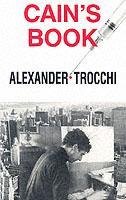
Cain’s Book

Like rock stars, some novels are eaten alive by their fans. Embraced by a severely circumscribed subculture, they turn from works of art into manifestoes, or worse, Bibles, and cease to be read by ordinary folk. Scottish-born Alexander Trocchi’s Cain’s Book (Grove Press, 1960), his one intentionally literary performance (unlike Helen and Desire, an earlier book written for and published by Olympia, the erotic press), is a good example. Written by a heroin user who made no bones of his addiction—indeed, he embraced it almost as part of his “craft and sullen art”—no sooner did Cain’s Book hit Brentano’s shelves than it was hailed by addicts less as a masterwork of prose than as a vindication. Like Burrough’s earlier Junkie, the book was seen as a poetic license to shoot up.

In the form of a somewhat arbitrary journal, the book (for its own sake, for now, I’ll back off calling it a novel) chronicles an unspecified period in the life of Joe Necchi, junkie, who captains a scow for the Mac Asphalt Company in New York Harbor: the perfect junkie job, since it requires almost no effort. The book opens with a description of its narrator watching the sky above Flushing Bay turn pink. “The motor cranes and the decks of the other scows tied up round about are deserted,” Trocchi writes, capping an almost homey first paragraph. Then, on a line all it’s own:

“Half an hour ago, I gave myself a fix.”

Thus the book’s two poles are fixed: the soft-lit, contemplative, introspective world of the brooding poet at one extreme, and the sharp, angular, staccato world of junkiedom at the other. On Trocchi’s behalf one hesitates to label these poles “positive” and “negative,” since he would surely argue against such polarization: that the junkie’s world is one and the same as that of the poet, that both extremes arise out of the same instructional oblivion, that special brand of “here-and-now” ness attainable only under the influence of certain soluble narcotics, with a little hash or weed thrown in now and then. The book goes on to describe, in elaborate and even loving detail, the act of shooting-up, after which the narrator lies contemplating the movements of a fly on the wall as it “worries” the dry corpse of another fly.

All of which may seem tedious, but isn’t, thanks in large measure to the fine quality of Trocchi’s prose, which rarely slips beneath the level of poetry. Soon thereafter the narrative drifts into a meditation on the state of the mind under the drug, and from there into its virtues, chief among these being that it empties the mind of such nagging questions as What the hell am I doing here?, “transports them to another region, a painless, theoretical region, a play region, surprising, fertile, and unmoral.” In due time we come to realize that the narrator seeks more than mere oblivion: he seeks total emancipation from the demands of civilization.

Specifically, he wants to avoid two things: questioning his life, and working.

And so we arrive at the book’s real theme, which is not heroin or drug addiction, but the illegitimacy of the Protestant work ethic, and, above and beyond that, the indecency of the whole concept of “work” itself. This is the heart and soul of Trocchi’s book, which appears to have been lost on its junkie adherents. Joe Necchi thinks work a bad idea and an even worse habit— worse, to be sure, than junk, which, though it may take possession of its user’s bodies, at least doesn’t rob them of their very natures, their souls (the assumption being that one’s nature is not to work, but to nod off watching sunsets and flies).

The book’s rambling, fragmented, arbitrary form is itself a testimony against rigor: I’ll write my book if I please, when I please, any damn way I please. Transitioning merely by means of sheer strips of white space, narrative gives way to philosophy, or perhaps a random quote from the narrator’s journal—as if what we’re reading isn’t random/journal enough. Part of Trocchi’s plan— the better part of his genius as well—consists of proving to his reader just how free he can be, no less than Picasso painting bulls in the dark with a candleflame, or Nijinsky dancing naked in a Baltic hotel room. Trocchi knows he can write; he doesn’t have to prove it (though he does, in several brilliant set pieces, including a warmly funny reminiscence of his neurotically obsessed father, and a terrifying description of a storm at sea—as good as anything in Conrad or Melville). Rather than satisfy the dry thirst for a crisp, clean narrative, he slakes his own thirst for artistic freedom, and writes only when inspiration, or the mood, strikes.

The result is a book which, however formless, is never without poetry and vigor. Even when waxing didactic (as when railing against our judicial system’s fanatical pursuit of its drug addicts) Trocchi does so with poetic verve. But the book is no diatribe, nor is it meant to be a manifesto. It is in fact a novel in the best sense of that word, in that it shapes its narrative in a new, untried and risky way, unlike so many books today that take no risks, that read as though vying for, if not Oprah’s, the Writer’s Workshop Seal of Approval.

But lest anyone think I praise Trocchi merely for being a renegade, I offer the following evidence that he was, first of all, a writer:

I was standing in the wind, clutching at the doorway of my shack, the sea falling steeply away under my narrow catwalk, and for a moment I had the impression of tottering at the night edge of a flat world. Then I was going down like you go down on a rollercoaster, braced in the doorway, the cabin light flooding out round about me as though it would project me into the oncoming blackness. Black, then indigo as the horizon moved down like a sleek shutter from somewhere high above and flashed below the level of my eyes. A moment later the sea rose with a sucking sound and slid like a monstrous lip on to my quarterdeck about my ankles. It was icy cold. At that moment, staring down at it as it swirled round about the battened hatches, it occurred to me that I might be about to die.

Alexander Trocchi (who remained a heroin user for the rest of his life and died in 1984) never wrote another book, in part because he jettisoned whatever scraps of discipline he’d clung to. In the end, as much as his addiction, his philosophy did him in. “Love and work,” said Freud. And Trocchi, rebelling against the latter, killed off the former—his love for writing, his poetry, his passion.
Posted in Dreaming on Paper, Uncategorized | Leave a comment

Little Gray Men

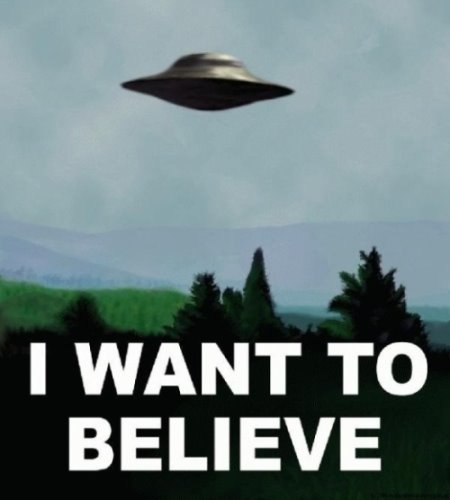
In the early 1960’s, before the Kennedy assassination and Little Rock, before “I have a dream,” on a lonesome country road in New Hampshire, a mixed-race couple, him black, her white, encounter a flying saucer, which assails them with its spiraling red and white lights before landing nearby. Before the episode ends, the aliens abduct the couple and perform bizarre examinations on them during the course of which they discover that the man, Bernie, wears false teeth. The aliens, it should go without saying, have big heads and large eyes. Oh–and they happen to be gray.

This is the rudely summarized plot of Peter Ho Davies’ short story, “The Hull Case.” And it could be read as a blatant and even clumsy metaphor for the anxieties, hopes, delusions and fears of a racially mixed couple living in a still very segregated society, with the gray aliens standing in for the biological children they could not have. But the story turns out to be true: Davies based it on the famous case of a real mixed-race couple and their highly publicized encounter with extra-terrestrials–an encounter which, in those post-Rosewell years, was taken quite seriously by the likes of LIFE magazine and the United States Air Force, who sent an officer to interview the couple at their home. The scene of the couple being questioned by “the colonel” forms the backbone of Davies’ tale, with a devoted yet reluctant Bernie forced into the role of unwitting accomplice alongside his overenthusiastic and even evangelistic wife, Bessie, for whom their encounter with aliens is more than freak occurence: it is touched with Destiny and Purpose; it has given meaning not only to their lives, but to life in general.

One of the themes of the story as written by Davies is the very human need to give shape and substance to existence, to find meaning not only in everyday occurences, but in tragedies such that they are mitigated, or at least made bearable. For Bernie and Bessie, the tragedy is their inability to have children. That’s Bessie’s tragedy, anyway. For Bernie, though, the tragedy runs deeper. For unlike his white and rather innocent wife, Bernie is no innocent. He is all-too aware of the prejudices that divide him from the wider white society around him, and of the fear with which he navigates his way through a “whites only” world. When while driving to Niagara Falls for their second honeymoon they first see the swirling lights in their rearview mirror, Bernie jumps immediately to the conclusion that it must be the police; that they are being pulled over, and dreads what may ensure when the officer shines his flashlight in their mixed faces. Top be kidnapped by aliens would, for Bernie, have been the lesser of evils.

We all, to greater and lesser extents, at least from time to time, yearn to be removed from the gravity of our own circumstances, to be free of the local earth and the tremendous weights and pressures that life imposes on us. Add the pressures of prejudice and bigotry and the existential wound inflicted by childlessness, and you have a recipe for an abduction fantasy. Like the aliens who populate it, the kidnapping fantasy itself becomes a substitute for the child this couple never had, the life that might have served as their emissary into a more tolerable and tolerant society, a world where skin colors wouldn’t matter so much; indeed, one where a black man might even be made President of the United States. Of course, space aliens are emissaries. Typically, they bring a wider view of things, of a universe wherein planet earth is but one of many planets with a culture and civilization. And being far wiser than us they bring warnings, dire ones, usually, of imminent self-annihilation. They come in peace to save us from ourselves and to remind us of all that we have to lose.

Children serve that function. They tell us, first of all, that there is more to our lives that just our selves, that there will indeed be a future, and that we have a stake in it. For Bernie and Bessie, that future had been cruelly excised. It was almost as if the mis-matched colors of their skins precluded it, as if all the forces of nature and society–at least the bigoted society that Bernie has embodied within him in the form of primal fear–conspire against their taking root in the world. Bernie wears false teeth; he has lost his “bite.” A toothless animal is helpless against its enemies. Bernie is physically and emotionally impotent, powerless to change the world, irrelevant to its plans. For Bessie, this sense of powerlessness is liberating: in being abducted by space aliens she feels a sort of rapture. In what she cannot explain or control she takes solace and even finds a form of salvation. This makes more than a little sense because Bessie is a woman, and a woman’s body is made to be “invaded”–first by the man’s penis, then by his sperm, and finally by the fetus that occupies and grows in her womb. For a woman this type of surrender is not only natural, but blissful.

For Bernie things are different. To the extent that he must surrender himself (to his impotence, to his powerlessness, to Bessie’s will), he feels nothing but shame and guilt. A man’s role is not to surrender, but to fight and to fertilize; to defend himself and his family; to push forward into the future, staking claims along the way. But Bernie’s only future now, aside from a pension from the post office where he works, is that of a toothless spent warrior whose fighting days have ended before they have even begun, and whose legacy will likely be determined by the degree of credibility assigned to the story that he and his wife tell to the Colonel–a tale that, even as he corroborates it, Bernie knows is absurd, laughable. His life, in other words, is a joke. The one thing he is able to nurture, his only stake in the future, is as a footnote to an absurdity: that will be his legacy.

If the “children” of Bernie and Bessie’s marriage are gray, it is not only because they have skins of different color. The “mixture” goes further than color. The gray here is that of mixed feelings, the gray of doubts and regrets, of uncertainty and of dubious claims. After all, whether Bernie is indeed the co-creator of the abduction story, of his wife’s “child,” is questionable: for all he knows that seed may have been planted without him. There, too, his role may be superfluous. The child she carries for them both may have resulted from a virgin birth: a divine, if not an immaculate, conception.

Posted in Dreaming on Paper, Uncategorized | Leave a comment

Head Paintings

In my waking life, I’ve been a figurative painter and illustrator. But in my dreams, or just lying in bed, I was an abstract expressionist.
For years I dreamed paintings—if “dreaming” is the right word, since often the paintings appeared with me still awake, dozing off, sleepy but not yet sleeping. At first the paintings (here, too, the term doesn’t quite fit: they weren’t paintings at all; they were hallucinations, visions, or a combination of both) came to me unbidden. I would be lying there with my eyes closed in the dark, having just switched off my bed lamp, when suddenly my mind’s eye would turn into an art gallery, with image after image presenting itself. But unlike a gallery where you stroll from painting to painting, this mental exhibition consisted of a single fluctuating canvas or screen on which one image gave way seamlessly to another, and another, with colors, shapes, and textures melding, shifting, swirling —like the flames of a fire or chips in a kaleidoscope.
Something similar used to happen to me when I’d go swimming in my favorite lake. Afterwards, I’d lie sunning myself on a flat rock at the shore. With my eyes closed, the combination of sunlight and blood vessels produced the most thrillingly brazen abstract paintings behind my eyelids, works that could have given a run for their money to any by Rothko, Gorky, or Miro. By squeezing my eyes or shifting my head a little this way or that, I could adjust the paintings, alter their shapes, their hues, even their brightness and intensity. I could “conduct” them like Toscanini conducting a symphony.
But the paintings I saw in bed were different. There, no sunlight explained the phenomenon; the room was in complete darkness. Nor did my blood vessels contribute in any way to what I saw (here, too, “saw” is probably the wrong word. Imagined?). Nothing physical accounted for the display. These “paintings” were purely the work of my unconscious, with no collaboration from outside.

And they were good paintings, very good paintings. Describing abstract feelings with words is hard enough; describing abstract paintings is all but impossible. And there were so many, and no two alike. 

But let me try.

Picture lichen or mineral deposits growing in all different colors and patterns on the surface of a perfectly flat, even rock, or flowing, multi-colored lava, swirling and spreading itself across a smooth surface. Sometimes these molten colors arrange themselves within crude geometries of rugged, rough line—as if snared by a net. Others were grouped in geometrical patterns, like the bricks of a wall (I think of Sean Scully’s “brick” paintings; but the bricks is mine were smaller, less rigid, and more crustily textured). Sometimes, out of the colors and textures, faces would emerge—grotesque and likewise crude, as if drawn by a child with a blunt crayon. 
Much of the beauty of these visions lay in their perfect randomness, the sort that painters, who are always hoping for happy accidents, struggle to but rarely achieve, a randomness both arbitrary and inevitable. (The closest thing I’ve ever achieved to it lies on the shelf of my easel, where a coral-like thick crust of paint has accumulated over the years: at this coral-like crust of paint I would gaze admiringly and think, “Why can’t you paint like that on purpose?”) If  you’ve ever looked with an artist’s eye at a patch of concrete, or a cracked wall, or the side of a garbage dumpster plastered with torn bill postings, you’ve known the beauty of randomness.

And yet the images I saw night after night for a dozen nights were remarkably consistent—works produced, as it were, by the same hand. The paintings changed; but the “artist” remained the same. More impressive still–at least to me–was the fact that, though entirely unfamiliar, the paintings on display felt like they were mine. I’d never painted anything like them, and yet I felt that I ought to paint them, that no one else would or could. Consciously or not, they were informed by my aims, principles, and desires. Something in me had created them.
But here again the word “created” isn’t right. Doesn’t creation involve effort? Yet no effort was expended; the paintings simply appeared. It made me question the whole notion of creativity. Supposing I had a magical button the pressing of which would transform my mental paintings into physical works on canvas. Would that be cheating? Could I truly take credit for “creating” them, in that case? If the artist doesn’t labor to produce his visions, does that make him less of a visionary? Would it render his visions any less valuable, or valid?

As someone who has worked with computer applications like Photoshop and Illustrator, I am fascinated by the whole concept of a “virtual image,” one that exists not as paint or some other substance on a ground or in any tactile form, but only as a series of pixels whose colors, in turn, are determined by binary values. With a computer, the artist doesn’t actually “paint” anything; he simply assigns those values to an array of pixels; there is no “painting,” per se. And yet effort is expended; work is done. Hard work, as a matter of fact. And a product is achieved; an image that can be shared with others is produced.

My head paintings were different. They were shared with no one but me. In fact the only proof you have of their existence is my word. If I say they were beautiful, if I call them masterpieces, you have every right and reason to doubt me. And yet I swear it’s true. But before you write me off (and accuse me of immodesty, to boot), let me repeat that I didn’t make the paintings; they were made for me out of a mixture of memory, experience, and desire.

And sometimes with a little prodding from me. For as with my eyelid paintings, I taught myself to “conduct” them. And so, for a dozen or so nights, night after night, in collaboration with my unconscious, I “head painted” thousands of head paintings—an output surpassing even that of Picasso in its abundance and variety.

At first I welcomed this abundance; in fact I couldn’t believe my luck and even felt blessed. But after four or five days I also felt exhausted, since along with whatever pleasures they offered, each of these thousands of head paintings came with an obligation to go to the easel and produce the real thing. For a while I kept a sketchpad on my night stand, and tried to reproduce, in rough outlines and color notes, the best of the best of these offerings, switching the light on every five or so minutes, with notes accumulating, displacing sleep. I was reminded of that episode of the Lucy show, the one where she’s working on a cake assembly line that keeps going faster and faster. And anyway my task would have been impossible: the only way to do justice to paintings isn’t with a pad and pencil, but with paint on canvas. After ten nights I felt like shouting, “Enough, already!”

At last, the images stopped coming. I made them stop. I forced myself to think of other things. If a “painting” popped into my mind I mentally batted it away. I needed my sleep.

* * *
Like a fawning grandparent, the unconscious gives us more goodies than we can ever need or use. In his book Musicophelia, Oliver Sacks tells the story of Berlioz’ “lost symphony,” how the composer supposedly woke up twice with the same symphony fully formed in his mind, only to put it out of the same mind, his situation at the time being such that he could scarcely take the time to write down a symphony, even one “pre-composed.” It happened again, and again Berlioz put it out of his mind, but this time with the remorse a parent feels for an aborted child. Thereafter, night after night, Berlioz awaited the return of his dream symphony, but it never came back. He never forgave himself.
On the other hand, some “masterpieces” may best be left to the imagination. That may be their natural medium, the soil in which they flourish. They don’t belong in the real world, exposed to harsh daylight and the even harsher scrutiny of audiences and critics. They are too personal, too private, to delicate. Like those bodies perfectly preserved in peat bogs, once exposed to oxygen they disintegrate into mud.
I was going to attach an image to this post, but then I realized there’s no point. No actual image, my own or anyone else’s, can do justice to my “head paintings.” In this they have something in common with most if not all fantasies:

They’re better left in the mind.

Posted in Dreaming on Paper, Uncategorized | Leave a comment

Songs That Have Hummed Me

Some time ago I stopped being able to listen to music when writing. First I had to cut out music with words, then strong rhythms, then all forms of percussion. For a while I listened to movie scores, but soon they, too, took over, dragging me away from my own stories and into the movies whose scenes they orchestrated, ditching me in sweltering, neon-stained New Orleans, or dangling me from Lincoln’s Beard on Mount Rushmore. That left me with lullabies, etudes, and chamber music, a Debussy nocturne, a Mozart quartet. Like one of those people with horrible autoimmune dysfunction, I found I could no longer listen to anything while working but an occasional Brandenburg concerto or two—a diet of pure salade frisée. Then the concerti, too, wore out their welcome. And the rest was silence. 


But not quite. For I don’t mean to suggest that music hasn’t been very much a part of my writing. It always has been. It’s that the music hasn’t always been playing except virtually, as a sort of aural hallucination, a CD spinning around in the back of my brain. One way or another, always, in writing, I’ve had music somewhere on my mind.

But there were days when I worked to real music. My first unbearably bad unpublished novel I wrote to strains of Gershwin’s Second Rhapsody played over and over again—to the displeasure of my college roommates, who suffered it continuously despite attempts to drown George out with the Boss and Steely Dan. What did Gershwin or his rhapsodies have to do with the novel I wrote? Nothing, really, except that the novel was set in New York City, and no music reminds me more of New York—or at any rate of the New York of my (and perhaps everyone’s) dreams—than Gershwin’s (think of that opening clarinet glissando in Rhapsody in Blue rising up, up, up into the stratosphere—like those stainless steel vaults crowning the Chrysler Building; music to build skyscrapers by).

My second (and slightly less bad) novel I wrote almost exclusively to George Winston’s Thanksgiving. Titled The Sidewalk Artist, it was the story of a successful Madison Avenue advertising executive who quits to become a chalk gypsy or screever, someone who draws on sidewalks with colored chalk. Here, too, the relevance of the music was unknown to me then. But in hindsight Winston’s spare, deliberately melancholy composition (played in bare feet) perfectly suited a melodramatic tearjerker set during a harsh New York winter, wherein my protagonist finds himself living among urchins in an abandoned rail tunnel under Grand Central Station. It was music to feel sorry for your protagonists to.

Sometimes the connections between songs and stories are obvious; other times they need a Freud to rout them. When I wrote “The Girl in the Story,” one of the stories in Drowning Lessons, why did Ruby Tuesday keep flitting through my brain? Easy: because the real-life prototype of Stephen O’Shan (a.k.a. Colin David McDoogle)—the luckless leprechaun of an Irishman whose girl the narrator sleeps with—and I dropped acid together once in his garage loft, and spent most of our subsequent trip “digging” that song (a fine song, by the way, to dig to on acid; by five in the morning I was convinced that I had written it).

And does Bach’s Toccata and Fugue in D-minor go with “My Search for Red and Grey Wide-Striped Pajamas” because the tune was written into the plot of the story, or was the tune written into the plot of the story because it was in my head at the time when I wrote it?

Honestly, I don’t remember.

Other cases offer more mystery. Why, when writing “The Wolf House,” a story about a gathering of old high school chums for a comrade’s funeral, did I play the score to Bridge on the River Kwai? No idea, but today I can’t read or even contemplate that work without hacking my way through a sodden Burmese jungle en route to destroy a bridge built by a fanatical British Colonel (Alec Guinness) for the Japanese army he despises.

And what does The Blue Danube have to do with a story about an African-American caretaker in charge of the last remaining survivor of the Titanic disaster (“The Sinking Ship Man”)? Oh, yes, now I see: In the 1958 film A Night to Remember as the gloriously illuminated ship (actually a large model) steams past the camera we hear strains of Strauss’ most famous waltz as played by the ship’s band—the same band that, hours later, in the movie and according to legend, would play ‘Nearer My God to Thee as the doomed liner nosed under).

You see that movie score music plays a big part in my writing life, maybe because what I mainly ask of music is what I demand of my work: that it take me places: not just to physical places, but that it transport me in and out of various moods, something movie scores are designed implicitly to do. And so when I wrote Life Goes to the Movies, my forthcoming novel about a Vietnam Veteran-turned filmmaker who goes over the brink of madness, I listened continually to Alex North’s jazz-inspired theme for A Streetcar Named Desire—logically, because the book is about movies, but specifically because the novel’s antagonist, Dwaine Fitzgibbon, puts the narrator in mind of a young brooding Marlon.

I will end on this note: that music—songs especially—can be dangerous, especially if and when we ignore their implications. For better or worse, there are usually reasons why they are there, in our heads or on our CD players or ipods. Two summers ago, at a writer’s colony in western Massachusetts, while drafting a novel I played two songs over and over again —not while I wrote, but mostly in my Honda Civic while rolling around the countryside, enjoying the beauty of the Berkshires. Both songs were by the Beatles. One was Ticket to Ride, the other Yesterday. I came home to learn that my wife of twenty years had decided that she didn’t want to be a wife anymore.

More recently, on another fellowship at another colony (where I steered clear of love songs, thanks very much), I listened obsessively to The Moldau, Bedrich Smetena’s tone poem tracing the course of the Volga river in Czechoslovakia from its humble origin as a series of sparkling streams merging, past a hunt in the woods and peasants celebrating at a wedding along its banks, through a moonlit night and thunderous rapids leading it towards its own triumphant wedding with the open sea. The first time I heard The Moldau I was five years old. In his ratty laboratory at the bottom of our driveway my inventor papa kept a small turntable and a short stack of records, including some Maurice Chevalier recordings and a ten-inch, 78 rpm Decca recording of Alfred Wallenstein conducting the Los Angeles Philharmonic’s 1952 rendition of Smetena’s masterpiece. That the record was full of cracks only added to its appeal. Five years old and smitten with Smetena! But for me it wasn’t Smetena’s music as much as it was my father’s, belonging to him as much as the smells of solder flux, orange rind and scorched metal from the sanding machine and the lathe that filled his laboratory. Now, forty–six years later, the theme reasserted itself as that of a novel (“The Man in Blue”) about—among other things— a Czechoslovakian-German-Jew survivor of World War II, who owes his survival, in part, to a daring escape from a Nazi labor camp into a moonlit river. As with Drowning Lessons, water courses through this work, too, supplying its major metaphor. But the theme of water itself runs not just through my novels, essays and stories, but through my life. There are no accidental metaphors.

And there are no accidental songs or pieces of music. Which is to say: songs don’t lie. Not if they’ve gotten into your head, they don’t. And all music, if it works at all, works subliminally.

Whether we play music consciously or not, by accident or by volition, or even if we don’t play it at all, still, that won’t stop music from playing us.

Posted in Uncategorized | Leave a comment