Memories for Mom

I think of growing up and remember all kinds of things. I remember our house on the hill, and big willow trees along the driveway, and all those magical places in the woods and fields that we turned into “forts.” I remember the Wolf House, the rotting shell of what had been a guest house in the woods, and the old dilapidated chicken coop down by the barn that our inventor father converted into his laboratory, and that my brother and played in until it collapsed.

I remember the white picket fence that was always in need of paint and with tines missing here and there, and the mulberry tree that grew at one end of it, remember? And the time I nearly sawed down one of the three enormous maple trees around the house. All kinds of things like that I remember. The little slate stone patio next to Nonnie’s room and that we never used, and the forsythia bush that was visible outside of her window, and under which we built a baseball dugout that we used maybe twice, since there really wasn’t enough room in the back yard for a baseball field (instead George and I played “catch” on the grassy raised terrace behind the house). All these things I remember, but there are thousands more, all kinds of sweet little memories, like the space under the stairs leading down to the basement, how George and I would worm our way behind the trunks and other things stored there and play “Gilligan’s Island,” though what the basement stairs had to do with a motley crew of stranded castaways is anyone’s guess.

But the other thing I always remember is riding around in your black Mercury, how enormous that car seems in memory, so much like a boat, with its big chrome bumpers and scratchy upholstery and the hump in the middle of the rear seat. I remember us going to Danbury, to Jenung’s and the Bargain World and McRorey’s and other shops in and around Main Street, to Woolworth’s where I’d search the lollipop rack for my favorite flavor, root beer, and where we’d sit at the counter and order frankfurters for lunch. There was another store, too, that stands out in my memory because it seemed to stretch infinitely backwards, a never-ending store, I don’t recall its name, but they sold lady’s fashions and probably boy’s clothes, too (though these, I think, may have been upstairs at the top of a creaky wooden escalator).

These are good memories, very good memories, memories so good they make me slightly queasy with nostalgia. You were a good mom. You took us everywhere and did lots of things with us. I remember the carousel in the Buster Brown shoe store: do you remember the carousel? It was in the back of the store. And the Marcus Dairy bar—we used to go there, too. There was one on Federal Road on the way to Caldor’s; at least I think it was a Marcus Dairy, now I’m not so sure. And the one by the airport, though we didn’t go there so often. I remember the one on the way to Caldor’s had these big bowls of green relish on the counter, and how I would order a hot dog just to eat the relish.

Oh, yes, and there was another place you used to take us to on the way to Lake Candlewood, to the Landing (remember the Landing?), a place just at the start of Federal Road, before the Howard Johnson’s there, called the Chuck Wagon, where they served fried chicken and had a salad bar with baked beans, coleslaw, and three-bean salad: George and I were crazy about that place, and especially about the three-bean-salad, so sweet it turned vegetables into candy. We liked going there and we liked going to Val’s Hamburgers and Carvel: all of these good places were on the way to the Lake Candlewood, where we’d meet up with Dotty and Hank and Papa Joe and Vera and Dut and other people whose names I don’t remember anymore. Papa Joe would take me out on his Sunfish sailboat, and Hank would take us out in his little motorboat that he’d always have to bail a bit first (with the bilge water smelling of gasoline). Afterwards we’d all eat obliquely-sliced barbecued skirt steak with macaroni and tuna fish salad. I hated the skirt steak; liked the macaroni and tuna fish. I remember, too, that we had all kinds of elaborate rubber and plastic gear (bought at the Bargain World) with which to broach the Lake: a rubber raft that took forever to inflate, goggles, and fake plastic scuba tanks whose nonfunctional air hoses George and I sliced through with steak knives playing Lloyd Bridges in “Sea Hunt.”

But mostly I just remember lumbering around in the back seat of the Mercury, a car I didn’t much like back then (I thought it gave me headaches), but which I look back on very fondly now: I even look back fondly on the car that replaced it, the poor Rambler, which no one but you and the collector who bought it from you for $500 liked. I remember going to visit to Hollandas, and Ludwina B. and her daughter Jane.

In reliving all these memories I don’t know whether to feel happy or sad, because I miss things so much. I miss the innocence and simplicity and protection I felt back then, as a child. I had no idea, of course, how lucky I was, what a heaven childhood is: no child really knows it until it’s too late. As children we long to be men, and then at last we become men only to realize our longing for childhood. We appreciate everything once it’s gone. I do. Why is life that way? I miss so many things. I miss shopping at the Grand Union and the First National with you, and insisting that you buy frozen baked clams and prepared spareribs sticky with red Chinese barbecue sauce and Ovaltine and egg nog and anything highly caloric and otherwise useless.

Now I’ve got a daughter. Some day I’ll be part of good memories like this of hers. I hope.

Well, I’d better stop reminiscing. It’s probably not all that healthy. But I do enjoy remembering. And my memories are almost all like these ones, good. And I felt like sharing them with you.


Posted in Dreaming on Paper, Uncategorized | 1 Comment

The Lady Who Gives Permission

Today I’m going to see The Lady Who Gives Permission. Her apartment is on the Lower East Side, near Orchard Street, where vendors hawk shoddy clothes from their stalls. It’s a five story walk-up. The Lady Who Gives Permission lives on the fifth floor. It’s out of the way. But then The Lady Who Gives Permission is not a convenience. She doesn’t make house calls, either. You go to her; she doesn’t come to you.

Okay, maybe you don’t go to her.

But I do.

Every week, once a week. Sometimes I need to see her more often, in which case she does her best to squeeze me in. The Lady Who Gives Permission is on a tight schedule. Her dance card, as they say, is pretty full.

So I climb up the five flights. On each landing more light bulbs are blown so ap-proaching the top is like swimming upstairs into deep water, until there’s no light left at all and I start imagining secret black fish with tentacles. The stairwell smells of dead tuna fish, dust, mold, boiled cat urine. Why The Lady Who Gives Permission lives in such a dump is beyond me.

I wipe the sweat from my brow, knock. It takes The Lady Who Gives Permission five minutes to unbolt her six locks plus police bar. She opens the door a crack and peeks through, and out floats a stiff whiff of her perfume, a blend of roses and funeral lilies. She lets me in without a word.

There are two chairs, both rattan. The Lady Who Gives Permission has a thing for straw. No other furniture. Just a bean bag in the corner next to a guttering candle, and the large wicker chair that’s hers alone. The candle flame is repli-cated in the hundreds of beads of a curtain that divides the room, her “parlor” she calls it, from the rest of her apartment.

The Lady Who Gives Permission doesn’t ask me how I am, doesn’t offer me a drink, doesn’t hand me a tissue to wipe the sweat from my brow in summer or the snot from my nose in winter. She sits on her big round peacock-like wicker chair, lights a thin black cigarillo and looks at me, exhaling, the faintest of smiles cross-ing her dark lips.

“Well, now,” she says.

Those lips, by the way, are thin. The Lady Who Gives Permission has Hennaed hair tied in a rutabaga-sized bun behind her head. Her eyes are also thin, her cheeks rouged and flat, her earlobes droopy, her forehead shiny, her skull dandruffy, her fingers nicotene-stained, her teeth as golden as corn, her breath a heady blend of garlic and wine. Needless to say I am not physically attracted to The Lady Who Gives Permission. She does not interest me that way. Nor am I drawn to her mind, or her soul. From The Lady Who Gives Permission I want but one thing, and that is. . .permission.

“So, Julius, what’s on your mind today?” she asks, relighting her Tiparillo, or whatever it is, with a silver lighter in the shape of a grenade.

“I’ve been thinking,” I say hesitantly, “of going to Turkey.”

“Turkey?” she says, lifting a heavily made-up eyebrow. “You’ve been thinking of going to Turkey, have you?”

“Yes,” I say. “I’ve been thinking of going to Turkey.”

“Would you like permission to think of going to Turkey, Julius?” she asks with a tight little smile.

“No,” I say anxiously. “I want permission to go to Turkey.”

“Oh!” She takes a sip of mineral water. She always keeps a bottle of mineral water handy next to her wicker chair, but never, ever offers me any. For all I know there’s vodka inside. Or paint thinner.

“Turkey,” she says, bombing her Oriental rug with ash.

“Yes,” I say. “Turkey.”

“Why Turkey?” she shrugs. “Why not Greece? Or Rome? Or Timbuktu?”

“Because,” I say standing my ground. “It’s Turkey.”

She looks up at me, annoyed. “So, go to Turkey then. What do you want from me?”

Now it starts: the squirming. There’s no point fighting it. It happens every time. It’s part of the ritual.

“Just tell me it’s okay, okay?”

“Okay,” says TLWGP. “It’s okay. There. Satisfied?”

“You didn’t mean it,” I say, trying to keep my cool. “You have to mean it!”

“Of course I didn’t mean it, you fool! You expect me to mean it? You expect it to be that easy, big boy?”

“I just want your permission,” I say, my voice turning whiny already. “And don’t call me big boy. I hate it when you call me big boy.”

“What should I call you then, little boy? Would you prefer that?”

“Don’t call me big boy or little boy,” I say.

“What should I call you?”

“Don’t call me anything.”

“Are you being rude to me?”

“No! No, I wasn’t—I mean, I didn’t mean to be rude.”

“But you were, weren’t you? You say you didn’t mean to be, but you were mean to me just now, Julius, weren’t you? You came here to ask me for something. Wouldn’t you say it behooves you, under the circumstances, to be nice to me?”

“Yeah, sure, but–”

“Yeah? Sure? But? Is there some reason why you shouldn’t be nice to me?”

“No, but–”

“But?”

I look around helplessly, my knees knocking together. I wonder why I’m here. I always wonder. Why this woman? Who is she to me? And why doesn’t she do something about the air in here, like open a window?

“Very well, Julius,” says The Lady Who Gives Permission. “You may go to Turkey.”

“I may?” I say.

“Yes, you may.”

“Oh, thank you, thank you!”

“Please stop thanking me, let go of my hand and get up off the floor.”

“Sorry.” I get up and sit back on one of bean bag chair.

“And please don’t apologize. How many times do I have to tell you not to ever apologize to me?”

“Sorry. I mean—”

“For God’s sake. Never mind. What else?” She clips a fingernail.

“I’d–I’d like to have. . .an affair,” I blurt.

“Oh, so now you’d like to have an affair?”

“Is that asking too much?” I wonder.

“I don’t know, is it? What sort of an affair?”

“You know,” I shrug. “With a woman.”

“A married woman?”

“No! Well, yes. Could be. I don’t know.”

“You mean you haven’t made up your mind?”

“How can I make up my mind when I haven’t met her? Yet.”

“Oh, you haven’t met her yet. Why would you want to have an affair with some-one you haven’t met?”

“I thought if I had permission ahead of time it would. . .you know. . . simplify things a little.”

“Oh, you want things simplified,” says TLWGP. “That’s understandable. We all want things simplified. Very well: you may have your affair, once you find whoever. Just try not to get caught and don’t get any diseases.”

“Oh, I won’t, believe me, I won’t!” I say enthusiastically.

“Will that be all?”

“I’d like to stop swimming.”

“You’d like to stop swimming?”

“I swim a mile a day.”

“You’ve said so.”

“Well I’d like to at least, you know, cut down.”

“Which is it, then, stop or cut down?”

“I’d like to cut down first, then, eventually, stop,” I decide.

“I see: you’d like to cut down first then eventually stop. Hmm. Well, I’ll have to think about that, won’t I.” TLWGP thought. “Very well, you’ll cut down first, and then, eventually, stop. And what else can I do for you today, my dear?”

“My mother,” I said sheepishly. “Do I have to call her once a week?”

“When will you learn not to ask me such questions?”

“I’m sorry. I mean. . . I meant. . .Can I–”

“May you what?”

“May I call her every two weeks?”

“Done. Will that be all?”

I stand up and give her the money. Cash only. I’m about to go when something occurs to me. “Beggars,” I turn around and say.

“Mmm?”

“Panhandlers? Do I have to keep giving them money?”

“I don’t know: do you?”

“It’s just that. . .well, there’s at least one every block between the subway station and where I live. That’s six blocks, six panhandlers, a quarter per panhandler–that’s a buck twenty-five each way, coming and going. That’s two fifty a day. It adds up,” I say reasonably.

“And you would like to. . .” She cocks her head.

“If I could just give to every other panhandler.”

“Why don’t you give them all dimes instead?”

“Dimes. . .dimes!” The idea hadn’t even occurred to me. You have to admit she can be brilliant. “You’re right!” I said. “Jesus, you’re right!”

“We really have to stop now,” she says.

But I can’t resist; I’m on a roll. “Masturbation. I do it . . .like. . .three times a month. In the shower. While my wife reads in bed. Can I keep doing it?”

“Can you?”

“May I?”

“Of course you may,” she says wearily. “Really, Julius, must you waste your permissions that way? I’m sorry, but I’ll have to charge you for that.” She holds out her hand; I pay.

I’m at the door when something else occurs to me. “I pick my nose.”

“Ditto,” she says, and I hand her more money.

“And I don’t always wash my hands after–”

“I believe we are through for the day,” says TLWGP.

She opens the door for me. I hesitate.

“Wait. There’s—one more thing.”

“What is it?” she asks, blowing a sigh, tapping her foot.

“I’d like a hundred million dollars!”

“See you next week,” says The Lady Who Gives Permission, shutting the door behind me.

Posted in Dreaming on Paper, Uncategorized | Leave a comment

The Blackout


I was twenty, living on a loft in Soho, a different place in the summer of 1977: tougher, grittier, its cobblestone streets jammed with trucks and strewn with dumpsters slathered with graffiti and torn poster bills. No boutiques, no Balthazar.

Back then lofts were raw and illegal. Artists lived in them. Ours belonged to a professor at Pratt, a sculptor named Hockhausen. He sublet it to us, his students—an architect, a filmmaker, and a sculptor with two kittens, one black, one white, named Sacco & Vanzetti. The professor left behind some cans of household latex in different ugly colors: gray, purple, brown, pink. He left some big sheets of paper, too.

I carried everything up to the roof, and spread out a dozen sheets, their corners held down by bottles and bricks. With lettering stencils, a roll of masking tape, and a rough plan, I went to work. Pollack and Johns were my heroes. The paintings I made on the roof, surrounded by ventilators and tarpaper, owed everything to them.

Under a breezeless summer sun I worked all day. The forecast was good. I left the paintings up there to dry and went to bed in my cubicle. Each of us had his or her own private area. The filmmaker had one of two lofts, the architect the other; the graphic artist had her own room at the loft’s north end. I had the cube: a windowless box built into the loft’s center and painted white inside and out, the absence of color relieved only by a smudge or two. It was like living in a giant sugar lump. I considered hanging some of my paintings in there, but then it occurred to me that the white walls bearing down on me might be a source of inspiration.

I woke up the next morning to find the floor covered with pink, purple, gray, and brown paw prints. I ran up to the roof. All my paintings were ruined. The cats had run all over and ruined them.

The same day Sally, my high school sweetheart, called. A quiet girl into whose silences I read depths that probably weren’t there, I’d left behind in Connecticut to go to art school. Though I’d seen her over the summer, I wasn’t sure if I still loved her. She was more like a habit I couldn’t break. She was three weeks pregnant, she told me. No, she wouldn’t get an abortion. I reasoned; I argued; I pleaded. My words echoed off the white walls of my cube. Afterwards I walked onto the fire escape. The towers of Wall Street burned against the deepening dusk. I saw myself unloading crates of frozen fish at the Fulton Fish Market. As I stood there, John, the sculptor, came out in his bathrobe. He stood six-feet-four. “You know,” he said, seeing the look on my face, “if you were a woman I’d want to make love to you.”

That’s when the lights went out. Except for a few neighborhoods in the Rockaways the whole city went dark. Looters walked out of stores carrying frozen turkeys and television sets. Four thousand commuters had to be evacuated from the subway trains and tunnels. Anarchic mobs ravaged neighborhoods; in all thirty-seven hundred arrests were made. The lights were out for over 24 hours. Con Edison called the blackout “an act of God.” At least one man disagreed. “Tonight we are without God,” Father Gabriel Santacruz of Bushwick told his candlelit flock.

A week later, at Bridgeport Burger King across the street from Planned Parenthood, Sally and I sat at a table sipping milkshakes. A bright sunny August day. Thick slabs of sunlight poked through the window. Neither of us said a word.

Posted in Dreaming on Paper, Uncategorized | Leave a comment

Damian

He hadn’t had sex in two years. Except for a run around the park now and then, he never exercised. Two weeks out of every month he lived on fruit juice and nuts, and that’s when not fasting. The rest of the time he ate avocados, bananas, and other fruits. He had wanted to be an actor since he was five years old, when he saw James Cagney in White Heat on TV. He would practice with a toy gun in front of a mirror. You slap me in a dream, you’d better wake up and apologize. He was twenty-four years old.

We met at the Pratt Institute in Brooklyn. We were both undergraduates. I was there mainly to study painting and illustration, though I had no idea, really, what I wanted to do. I’d done some acting back in high school, and Pratt had a theater department. So I signed up for an acting class. That’s where I first saw Damian.

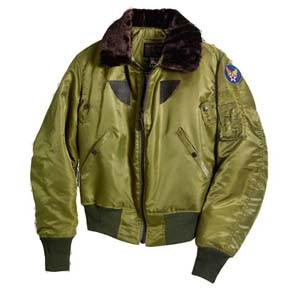
He wore a waist-cut shiny green (it must have been satin or nylon ) bombardier jacket with a furry collar over a red tee-shirt. The teacher, whose first name was Nancy, had us doing improvisational exercises. In one exercise we were supposed to be trapped with people in a stuck elevator. I watched Damian and three other classmates do the exercise first. They got in the elevator and acted normally, facing the front, not speaking. Then Nancy said, “Stop,” meaning the elevator had stopped. Everyone reacted in different ways. One student cried, another panicked, a third cracked jokes. Damian’s improve stole the scene. He started convulsing. We couldn’t tell if Damian’s character was having an epileptic seizure or a heart attack. Whatever it was, it was very convincing, so convincing Nancy broke in and cut the scene. But Damian kept convulsing. A thin stream of vomit bubbled out of his mouth and down the front of his red tee-shirt. Nancy yelled for someone to go call the police. That’s when Damian broke into a smile. It was all part of the act, vomit and everything.

He was extremely good-looking, Damian was. He looked like a Puerto Rican version of young Marlon Brando, with dark brown skin. This alone would have impressed me, since I was a big Brando fan and considered Brando the epitome of male beauty. He had the same tall forehead, sculpted jaw, thick flat brows, thick neck and broad shoulders. He knew he was beautiful, you could tell by his walk. He didn’t walk; he strutted. I asked him if he worked out. “Nevah.” He said it just like that, “Nevah,” with a kind of mid-Atlantic accent and a whif of disgust. “I don’t believe in exercise.”

I asked him if he didn’t exercise how he stayed in such good shape?

“I was born this way,” he said with a smile. “And I eat well.”

He invited me to his home. He lived in Manhattan, on the Upper West Side in the high nineties, in a high rise apartment building on Amsterdam Avenue. I remember walking into a brightly lit lobby with a security guard and linoleum and waiting a while for the elevator, which had graffiti all over it, and pennies jammed into the round holes drilled into a cover on the porthole window, which had been smashed. Damian lived in a studio on a high floor. Sounds of at least five radios leaked out into the hallway, but once I entered Damian’s sanctuary and he closed the door those noises were left behind, replaced by a woman’s voice crooning some old American standard.

“Who’s that singing?” I asked as Damian took my coat.

“You don’t know?”

I shook my head.

“Judy,” he said.

I had no idea who Judy was.

Damian took my coat and put it on a hanger in his sliding closet, next to his green satin jacket. I was impressed. I’d yet to meet anyone with an apartment of their own, let alone one in Manhattan, let alone one with a sliding closet door. He showed me the view from his window. If you looked hard over roofs and past the buildings and trees you could see gleaming white patches of the Hudson River. It was winter; the streets were full of snow. The sky was a bleary gray watercolor, wet on wet. Damian showed me around the apartment. There was only one room, really, shaped like an L, with the bedroom occupying the bottom of the L, and a galley kitchen just off to the side of it through a curtain. Over the bed he had draped sheer yellow fabric, forming the impression of a Bedouin tent or Mongolian ger there in his apartment. A stick of incense burned. The walls were decorated with his paintings, macabre works featuring dead birds and funereal flower arrangements on crackled black backgrounds. To the center of one painting a small, coffin-shaped box had been affixed. “Go on,” Damian said. “Open it.” I did. Inside was a small dead bird. It gave off a sharp whiff of decay. I closed the box.

“Death intrigues me,” Damian said.

“Why?”

“I don’t know. Because it’s everywhere. It’s part of life. It doesn’t depress me. It’s just part of the cycle. If things don’t die then nothing can be born.”

I nodded.

That afternoon we went for a jog in the park. Although philosophically opposed to strenuous exercise, Damian didn’t mind jogging. It relaxed him, he said. He had an extra jogging suit that he lent me. By late in the day the sun had melted the snow so the streets were full of slush. We jogged around Central Park. The same hills that had me gasping Damian broached effortlessly, without exertion. “All you all right?” he asked, jogging in place as i caught up with him. “Fine,” I said, panting. We had gone once around the park–a distance of over six miles–when he waited for me again and said, “Are you tired?” I shook my head. “Good,” he said, and started around a second time.

That same night, as I lay sore and exhausted on his couch, Damian prepared dinner. He made a dish called “baccala,” with salt cod, tomatoes and avocado, and sat watching me eat as he sipped from a large plastic bottle. “Aren’t you eating?” I said. Damian shook his head. “I’m in my fast,” he said. He fasted for three weeks at a time. Nothing but water with a dash of honey and lemon juice. He did it four times a year. “You should try it with me some time,” he said.

So I did. We fasted together. We started in November. Three days of fruit and leafy vegetables, three days of juice, six days of water (flavored with lemon juice and a few drops of honey), and then the reverse. Through the course of the fast I’d want to do at least three enemas, Damian informed me. “Otherwise nothing moves.”

When doing a fast like that, you’re not supposed to overtax yourself. No strenuous exercise, so said Damian. I didn’t listen. After two weeks, once I got past the hunger and headaches, I felt so great I wanted to go out and run ten miles. So I did. I ran all the way from Clinton Hill, Brooklyn, where I was living, to Damian’s apartment building on the Upper West Side, a distance of over ten miles. It felt great, my body like a feather on air. I felt I could run forever. Damian scolded me. “You could have passed out in the middle of Broadway,” he said. “You could have died.”

“Death intrigues me,” I said.

The watery part of the fast fell on Thanksgiving day. I was invited to a Thanksgiving party at my friend Crystal’s apartment in the Village. I remember standing among the guests holding my little bottle of lemon and honey flavored water and sipping from it as they ate turkey, stuffing, candies yams, the works. I didn’t mind. The only thing that bothered me was that every other word people spoke seemed to be about food. That’s all anyone talk about. What they’d eaten the day before, what they were going to eat the next day. This meal, that meal. This restaurant, that restaurant. This recipe, that recipe. It amazed me how obsessed everyone was with food, with the very thing I was doing without. “Have you ever eaten at…” “Did you try the pad thai at…” Twenty days earlier, under President Jimmy Carter’s watch, a group of militant Islamists had raided the American embassy in Tehran and took 53 hostages. We were going to war, I was sure of it. And here all these people were stuffing their faces with turkey and talking about food. I left the party in disgust. How could people waste their time with such trivialities as food? I made up my mind that eating was disgusting. I’ll never do it again, I thought, sipping from my water bottle.

When I next saw Damian I had broken my fast and was eating normally like everyone else. He asked me how it had felt.

“Strange,” I said. “At first it felt great, but then I couldn’t get along with eaters any more.”

“That’s what happens. If you do it regularly you’ll adjust.”

But I never did it again.

*

I think it was on my third or fourth visit with Damian that I slept over. We shared his bed, the one under the yellow drapes. I remember feeling a strange combination of comfort and fear as I lay next to him, feeling the magnetic pull of this beautiful dark body next to mine, both of us in our underwear. It wasn’t so much that I wanted to touch him (I was never that way), only that I knew how nice it would feel is I did. But I didn’t. We slept like brothers. He was like a brother to me, Damian was. My Puerto Rican brother. He called me that once. His white twin. No, he didn’t say brother; he said “twin,” “my white twin.” I remember how proud it made me feel to hear him call me that. As if having one twin wasn’t good enough; I needed two. I needed a Puerto Rican twin who looked like a dark Marlon Brando.

We went to the Dominican Republic together. It was Damian’s idea. He went there regularly. We booked a hotel in Santa Domingo and rode a packed bus to the beach called Boca Chica–“Sweet Mouth.” Our first afternoon on the crowded beach, Damian rubbed a concoction of baby oil and merchurochrome on his brown skin. Then he told me to wade out into the surf about two dozen yards and look back at the shore. “Just watch,” he said.

I did as ordered. I waded out twenty meters or so and then I turned and faced the shore in time to see all the heads there turning as Damian paraded his mahogany limbs down the beach. Men, women, children, dogs, no one could take their eyes off him, he was so magnificent. For the rest of that long day strange women threw themselves at him, inviting him point blank to sleep with them. I saw it happen. Damian showed absolutely no interest. He waved them away like flies. I asked him why. “Oh, Peter,” he said. “I am so thoroughly bored with all of that. I’ve had enough sex to last me a lifetime.” He sighed. “Life is too short.” In fact, I remember thinking, my friend Damian didn’t need anyone else to make love with. He had himself. And who could compare?

“But don’t you get lonesome?”

He shook his head. “Me? Lonesome? Nevah!”

*

For many years we were very close friends. He really was like a brother to me. Then suddenly Damian stopped returning my calls. I still remember my last visit to his apartment. I remember it because of an odd thing that happened. Remember that green jacket he used to wear? Well, it had been a while since I’d seen him wearing it, and so I’d asked, “Whatever happened to your green jacket?”

“What green jacket?”

“You know–the one you always used to wear? The satin one with the fur collar.”

“Oh, that awful thing! I burned it!”

“Burned it?”

“Yes–I burned it! I couldn’t stand to look at it any more.”

“Why burn it?” I said. “Why not give it away? Hell, I’d have liked it!”

“You don’t understand, Peter. If I gave it to you I’d have to look at it whenever you come over. And I couldn’t bear that!”

“What about Goodwill–or the Salvation Army?”

“It’s the same problem. One day I would be walking down the street and–ugh!–there would be that awful jacket, following me around like a ghost! No, I wouldn’t have it. And so I burned it. I always burn my old clothes!”

The reason I remember my last time in Damian’s apartment is because, while he was showering, I just happened to look in one of his sliding closets–not the one where he would always hang my things, another one. There, hidden deep behind some other clothes, was the green satin jacket. I reached a hand in to caress the fur collar. As I did I heard my name and turned. Damian stood there, dripping, with a towel around his waist. He slid the closet shut.

That was my last visit there. After that I called and called and always he made excuses, until at last I got fed up and stopped calling.

*

By then I was myself living with my wife on the Upper West Side, less than ten blocks from the apartment building where Damian still lived. It bugged me whenever I thought about it, to know he was that close and we never saw each other, that he had so completely lost his interest in our friendship. Why? Because I was married? Because he hadn’t become a great actor? He’d played a member of a street gang in a low budget feature. That was it, his biggest role. Okay. So what. I hadn’t been so successful myself. In fact I was something of a failure. Life is like that. New York is tough. Who cares? We’d known each other–what? Over ten years. And he no longer returned my calls. Fuck him! it made me so angry.

Then one day–this was around 1990, I guess–I was walking alone down Broadway when I saw a man in a plaid shirt selling posters. I recognized one of the poster images. It was a lithograph of one of Damian’s paintings, the one with the dead bird in a coffin, only the coffin wasn’t three-D. I turned to the man in the plaid shirt. “I know this artist,” I said. The man looked at me. As he did I realized: the man was Damian. Only it wasn’t Damian. He was too short, too slim, too old and insubstantial to be Damian. This man had gray hair. His shoulders were bony. He had dark red scabby blotches all over his face. This, I said to myself, is Damian, but in another dimension, in the Dimension of Death. This is Damian dying.

“Damian?” I said–and instinctively, without thinking, reached out to touch one of the scars.

“Don’t!” he said, and pushed my arm away.

“Damian–how are you?” But of course I knew the answer: he was dying. He had AIDS. How did he get it, without having sex? I asked myself but didn’t wonder.

“I’m fine,” he said. But his eyes said something else. They looked deeply, fiercely into mine and said, Keep walking, go away. Forget you have ever seen me like this.

I forget what was said then. Somehow we parted–awkwardly. I left him there on a corner of Broadway selling his posters, dying. I never saw him again.

Posted in Dreaming on Paper, Uncategorized | Leave a comment